Cracking the Code on Inflation
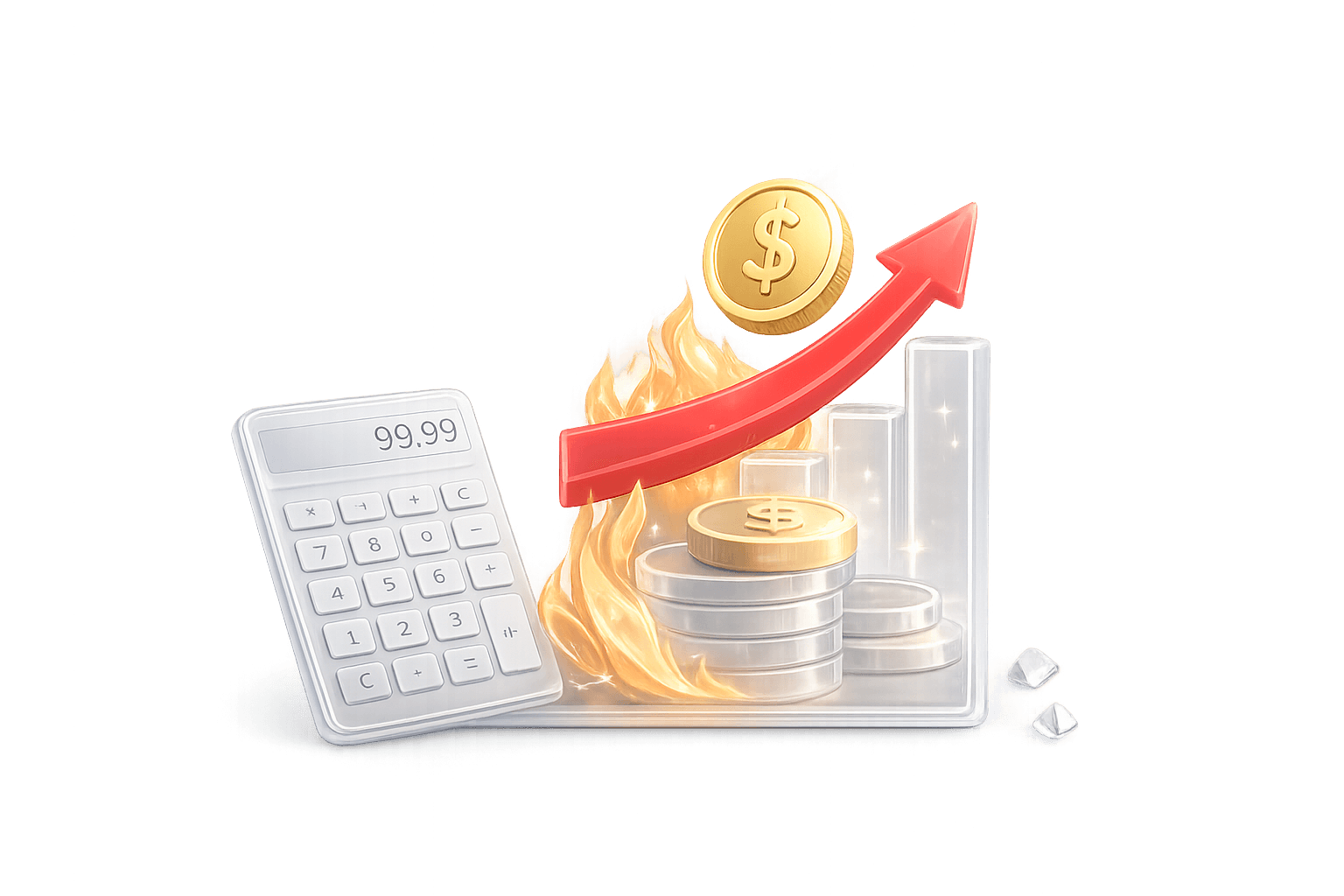
 This 3D-styled digital illustration depicts concepts of financial growth and inflation

Have you ever walked into a shop and realized your favorite snack suddenly costs fifty cents more than it did last month? You’ve just met inflation. While it sounds like a heavy economic term, it’s actually a very simple concept that changes how much "bang" you get for your buck every single day.

Think of inflation like that friend at a party who keeps eating all the snacks. Only in this case, the "snacks" are your purchasing power, and they’re disappearing right before your eyes.

Why the Fuss? The Real-World Impact

Inflation isn't just a number on the news; it’s a ripple effect that touches everything from your paycheck to your grocery bill:

  • Shrinking Buying Power: As inflation sneaks up, your money simply buys less than it used to.

  • The Struggle for Essentials: It hits low-income households the hardest. When the price of bread and milk goes up, there’s less wiggle room for everything else.

  • The Wage-Price Spiral: This is a tricky cycle where people ask for higher pay to keep up with rising costs. To pay those higher wages, businesses raise their prices even more, and the circle continues.

  • Investment & Debt Shifts: Sudden inflation can eat into your investment profits. On the flip side, it can actually be a "win" for people with fixed-rate debt, as the real value of what they owe technically decreases.

  • Business Blues: For companies, inflation makes raw materials pricier, which can lead to lower profits or even job cuts to save money.

What’s Fueling the Fire?

Inflation doesn’t just happen by accident. Economists usually point to a few main "spark plugs":

  1. Demand-Pull: This happens when everyone wants to buy the same thing, but there isn't enough to go around. High demand pulls prices up.

  2. Cost-Push: If it becomes more expensive for a factory to make a product—maybe because electricity or labor costs went up—they push that cost onto you by raising the price.

  3. Too Much Money: When there is an excess of cash circulating in the economy but the supply of goods stays the same, prices naturally climb.

  4. The "Expectation" Factor: If people expect prices to rise in the future, they often start paying more now, which actually helps trigger the very inflation they were worried about.

The Bottom Line

Inflation is a massive force in the economy that dictates how we spend, save, and plan for the future. By understanding these basics, you can make smarter financial moves and stay ahead of the curve.

Keep an eye out for our next post, where we’ll dive into how Islamic economics approaches inflation to keep the system fair and balanced!

Disclaimer

Investment Advisory Services are offered through Manzil Investment Advisors, LLC ("Manzil Invest"), a registered investment adviser. Securities are offered and sold through Alpaca Securities.


Manzil Invest is a registered investment adviser located in Dallas, TX. Manzil Invest may only transact business in those states in which it is registered or qualifies for an exemption or exclusion from registration requirements.

Manzil Invest’s website is limited to the dissemination of general information pertaining to its advisory services, together with access to additional investment-related information, publications, and links. Accordingly, the publication of Manzil Invest’s website on the Internet should not be construed by any consumer and/or prospective client as Manzil Invest’s solicitation to effect, or attempt to effect transactions in securities, or the rendering of personalized investment advice for compensation, over the Internet.


Any subsequent, direct communication by Manzil Invest with a prospective client shall be conducted by a representative that is either registered or qualifies for an exemption or exclusion from registration in the state where the prospective client resides. For information pertaining to the registration status of Manzil Invest, please contact the state securities regulators for those states in which Manzil Invest maintains a registration filing. A copy of Manzil Invest’s current written disclosure statement discussing Manzil Invest’s business operations, services, and fees is available at the SEC’s investment adviser public information website – www.adviserinfo.sec.gov or from Manzil Invest upon written request.


Manzil Invest does not make any representations or warranties as to the accuracy, timeliness, suitability, completeness, or relevance of any information prepared by any unaffiliated third party, whether linked to Manzil Invest’s website or incorporated herein, and takes no responsibility therefor. All such information is provided solely for convenience purposes only and all users thereof should be guided accordingly. This website and information are provided for guidance and information purposes only. Investments involve risk and unless otherwise stated, are not guaranteed.


This website and information are not intended to provide investment, tax, or legal advice.


Apple, the Apple logo, Apple Pay, Apple Watch, iPad, iPhone, iTunes, Mac, Safari, and Touch ID are trademarks of Apple Inc., registered in the U.S. and other countries. Android, Google Play and the Google Play logo are trademarks of Google LLC.


Manzil bears no responsibility for inaccuracies in the calculations or for the payment of purification itself.