Direct Investing vs. Managed Investing

With Manzil's new Shariah-compliant trading platform, Muslim investors now have a choice: build a portfolio themselves, or have one built for them. Understanding the difference is the first step to investing with confidence and in accordance with your values.
Direct investing means you choose and trade individual halal-screened stocks and ETFs yourself. Using Manzil's platform, every pick is checked against Zoya's real-time Shariah screening, so you know instantly whether a stock meets AAOIFI standards before you buy. Direct investing gives you full control, transparency, and the ability to start with as little as $100 through fractional shares. The tradeoff is time: you're responsible for research, timing, and rebalancing.
Managed investing hands those decisions to a professional or automated strategy that builds and rebalances a diversified, Shariah-compliant portfolio around your goals and risk tolerance. It's hands-off, but comes with a management fee and less say over individual holdings.
Data suggests "managed" doesn't always mean "outperforms." A study of 265 Islamic equity funds across 20 countries found funds in 8 countries significantly underperformed their own Islamic benchmarks, versus only 3 that beat them, often due to a smaller, Shariah-screened investable universe and higher active-management costs, not a lack of skill.
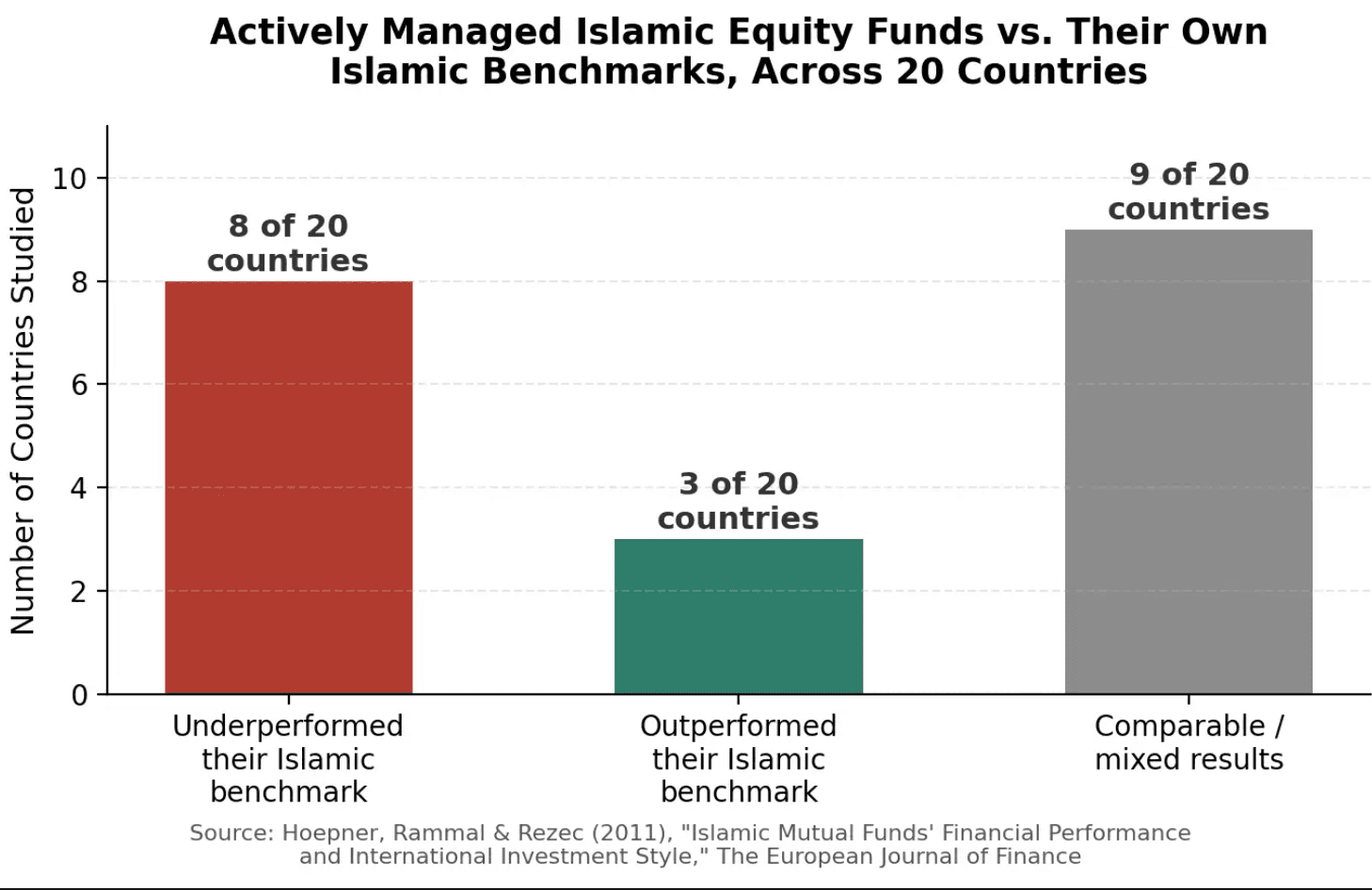
Source: Hoepner, Rammal & Rezec (2011), The European Journal of Finance
Underperformance tends to shrink in mature Islamic finance markets and widen where the Shariah-compliant universe is thinnest, a reminder that diversification and discipline matter as much as who's making the trades.
The takeaway: direct investing suits those who want control over each halal holding and can stay disciplined; managed investing suits those who prefer a hands-off approach, but neither guarantees you'll beat the market. Both can be halal, both can build wealth; the right one depends on your time, temperament, and goals.
This article is for informational purposes only and does not constitute investment, legal, tax, or religious advice.